
County Seat Newspaper
of Clare County
Clear, 22°
Wind: mph,



By MEGAN BARRON
Cleaver Guest Writer
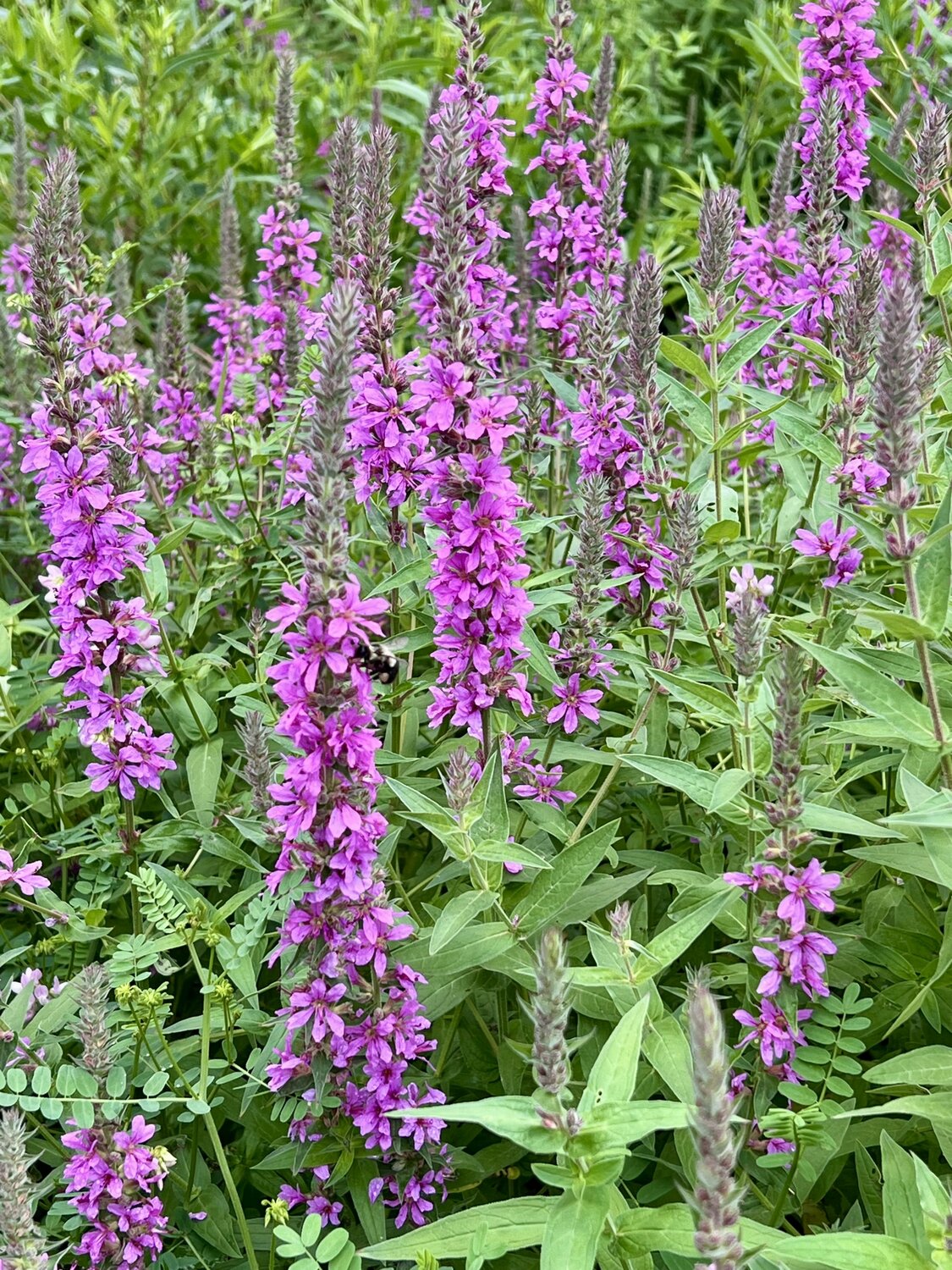
HARRISON – Purple loosestrife, an invasive species characterized by its prominent purple flower spikes, is prevalent across Central Michigan. Local specialists recommend proactive measures to address significant infestations to safeguard wetlands and waterways.
Molly Lewis, coordinator for the Central Michigan Cooperative Invasive Species Management Area (CM-CISMA), covering Clare, Gladwin, Gratiot, Isabella, and Midland counties, said the plant grows in wet areas like roadside ditches, riverbanks, and wetlands.
“Each plant can produce millions of seeds annually,” Lewis said. “While that sounds scary, it’s not a major concern unless it forms a monoculture, crowding out native species.”
Although not as aggressive as invasives like autumn olive, purple loosestrife can dominate wetlands when unchecked. Most local infestations are sporadic and manageable, with no documented evidence of resulting economic effects.
CM-CISMA recommends hand-pulling small patches, ensuring roots are removed to prevent regrowth, and tamping down soil to avoid erosion. For larger infestations, aquatic-safe herbicides or Galerucella beetles, which feed solely on purple loosestrife, are effective. “Beetles work well for monocultures, but you need enough plants to sustain them,” Lewis said.
No formal programs target purple loosestrife locally, and road commission spraying is not specific to the plant. Residents with large infestations should contact CM-CISMA at coordinator@cmcisma.org or 989-256-3147 for evaluation.
“Invasive species removal is a multi-year commitment,” Lewis said. “Hand-pulling is safest near water, but if residents choose to spray herbicides, be sure to find an aquatic safe brand and read the labels for proper instructions. For smaller areas, hand removing is probably the best option and the safest option since most purple loosestrife grows near water.”


Comments
No comments on this item Please log in to comment by clicking here